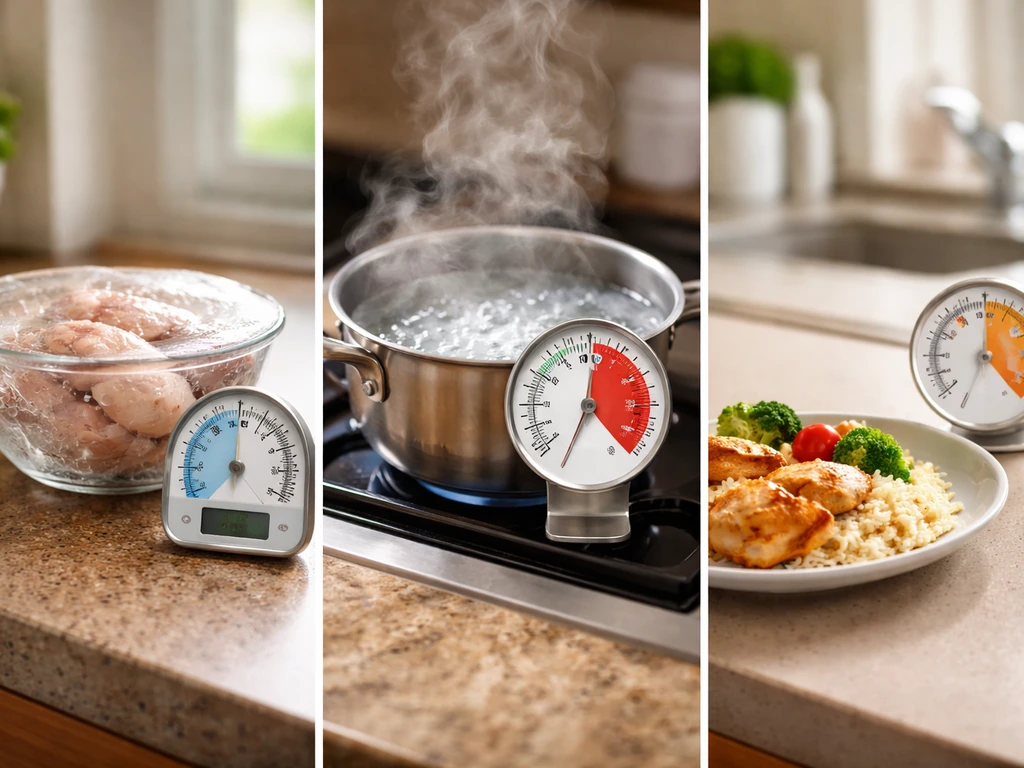
Pathogenic bacteria grow best in the danger zone, which the USDA FSIS defines as 40°F to 140°F (4°C to 60°C). Inside that band, conditions are warm enough to <a data-destination-keyword="at what temperatures do most foodborne pathogens grow most quickly" data-uuid="7FC2815F-37F2-4CB1-8548-207C2CF0F136">speed up bacterial metabolism</a> but not hot enough to kill or significantly slow most pathogens. The result is rapid multiplication: under ideal conditions, bacteria can double in number every 20 minutes. That means a small initial contamination can become a genuinely hazardous dose in a matter of hours if food sits at room temperature or in a poorly controlled holding environment.
Pathogenic Bacteria Grow Best in the Danger Zone: Why and How to Stop It

Marcus Reeves
24 Mar 2026
What the 'Danger Zone' Actually Means
The term 'danger zone' is a practical shorthand used in food safety regulations and training. The USDA and FDA both set the range at 40°F to 140°F (4°C to 60°C). Below 40°F, bacterial growth slows dramatically for most pathogens. Above 140°F, most vegetative bacterial cells begin to die off. The danger zone is essentially the middle ground where temperature is no longer a reliable control.
The FDA Food Code uses slightly tighter operational benchmarks: 41°F on the cold end and 135°F on the hot end. So for food service professionals working under FDA Food Code compliance (which covers most commercial kitchens and food businesses), the practical danger zone is 41°F to 135°F. The gap between 135°F and 140°F reflects the difference between where most growth effectively stops and where active kill begins. Either way, the core message is the same: keep food out of that middle range.
The reason this zone is dangerous isn't just that bacteria grow there. It's how fast they grow there. A pathogen load that starts at an undetectable level can multiply to illness-causing concentrations within a few hours of sitting in an uncontrolled temperature environment. That speed is what makes time tracking as important as temperature tracking.
Where Common Foodborne Pathogens Land in That Range
Not every pathogen behaves the same way inside the danger zone. Those numbers vary enough to matter for practical food safety decisions.
| Pathogen | Min Growth Temp | Optimum Growth Temp | Max Growth Temp | Notes |
|---|---|---|---|---|
| Salmonella spp. | 41°F (5°C) | 95–98.6°F (35–37°C) | 113°F (45°C) | Does not grow below pH 4.5; common in poultry, eggs, produce |
| Listeria monocytogenes | 31.3°F (−0.4°C) | 86–98.6°F (30–37°C) | 113°F (45°C) | Grows in refrigeration; high-risk for ready-to-eat foods |
| Staphylococcus aureus | 50°F (10°C) | 98.6°F (37°C) | 113–122°F (45–50°C) | Toxin forms separately from growth; toxin is heat-stable |
| Campylobacter jejuni | ~86°F (30°C) | 104–109.4°F (40–43°C) | 113°F (45°C) | Microaerophilic; needs reduced oxygen; narrow growth niche |
| Bacillus cereus | 39.2–43°F (4–6°C) | 86–95°F (30–35°C) | 122°F (50°C) | Spore-former; some strains can grow near refrigeration temps |
| Clostridium perfringens | 59°F (15°C) | 109.4°F (43°C) | 122–131°F (50–55°C) | Anaerobic; thrives in bulk cooked meats; spore-former |
| Clostridium botulinum | ~38°F (3.3°C) | 95°F (35°C) | 118°F (48°C) | Toxin-producer; anaerobic; pH 4.6 or lower halts toxin production |
A few things stand out from that table. Listeria monocytogenes is the one that surprises most people: it can grow at temperatures as low as 31.3°F (−0.4°C), which means refrigeration slows it but does not always stop it. Campylobacter, on the other hand, has a surprisingly narrow and high optimum range (around 104–109°F), which is why it's primarily a concern in undercooked poultry rather than in slow, room-temperature spoilage scenarios. Clostridium botulinum and Clostridium perfringens are both anaerobic spore-formers, meaning they can survive cooking and then grow in sealed or low-oxygen environments when temperatures drop back into the danger zone.
Temperature Doesn't Work Alone: pH, Water Activity, and Oxygen
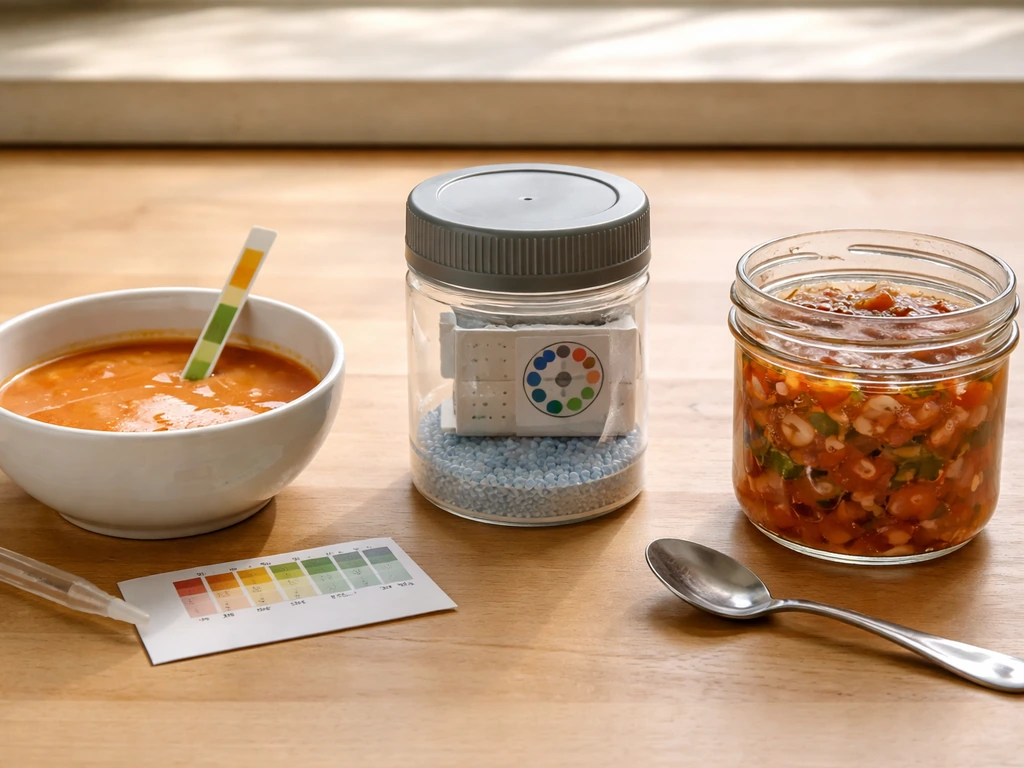
Temperature is the most talked-about growth factor, but it's one piece of a larger picture. Bacteria need water, nutrients, a hospitable pH, and an appropriate oxygen environment to grow. When one of those factors moves outside the pathogen's tolerance range, growth slows or stops even if the temperature is right in the middle of the danger zone. This is the basis of hurdle technology in food preservation: stack enough limiting factors and you reduce risk even without total temperature control.
pH
Most foodborne pathogens prefer a pH range of around 4.6 to 9.0, with optimum growth near neutral (pH 6.5–7.5), in general pathogens grow very slowly at what pH level. Dropping pH below 4.6 is the key threshold for controlling Clostridium botulinum: the FDA notes that a pH of 4.6 or lower is adequate to prevent botulinum growth and toxin production. Salmonella doesn't grow below pH 4.5. Staphylococcus aureus is more acid-tolerant and can grow down to around pH 4.0 under otherwise ideal conditions, though toxin production requires a higher pH. This is why vinegar-based pickles and fermented foods have long track records of safety, and why low-acid canned foods require pressure processing rather than water-bath canning. pathogens grow best in food with little or no acid
Water Activity (aw)
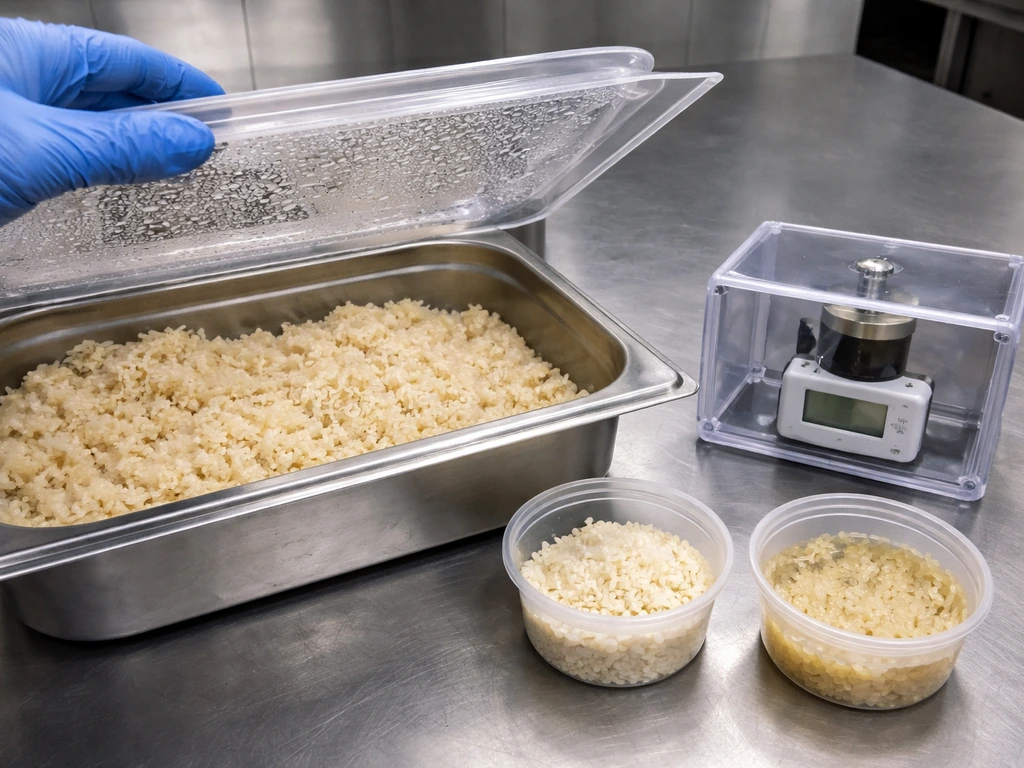
Water activity (aw) measures how much free, available water a food contains on a scale from 0 to 1.0. Most pathogens need an aw of at least 0.85 to 0.91 to grow. Fresh meat, cooked rice, and soft cheeses sit at aw 0.95 or higher, which is well within the growth-permissive range. Dried foods, hard cheeses, jams, and foods preserved with salt or sugar have lower water activity, which limits bacterial growth regardless of temperature. Research on Staphylococcus aureus shows that combining reduced aw with unfavorable temperature (toward the edges of its growth range) has a compounding limiting effect on growth rate, illustrating how these factors interact rather than act independently.
Oxygen
Oxygen availability determines which pathogens can grow in a given environment. Aerobic pathogens need oxygen; anaerobic ones (like Clostridium botulinum and Clostridium perfringens) grow only when oxygen is absent or very limited. Campylobacter is microaerophilic, meaning it requires a reduced but not zero-oxygen atmosphere. This matters for packaging decisions: vacuum-sealed and modified-atmosphere packaged foods limit aerobic spoilage organisms but can inadvertently create ideal conditions for anaerobic pathogens like C. botulinum if temperature control fails. Studies on C. perfringens in ready-to-eat products confirm that packaging atmosphere, water activity (around 0.96 in those datasets), and temperature all interact to determine actual growth kinetics.
Practical Steps to Keep Food Out of the Danger Zone
Knowing the theory is useful, but the real question is what to do in a kitchen, food service operation, or home setting. The following steps are drawn directly from USDA, FDA, and established food safety training frameworks.
- Use a calibrated food thermometer. Don't guess temperature based on appearance, color, or steam. A thermometer is the only reliable check, especially for thick cuts, large batches of food, and microwave-reheated items that can have cold spots.
- Refrigerate perishable foods at 40°F (4°C) or below. For FDA Food Code compliance in food service, the target is 41°F or below. Check your refrigerator's actual temperature with a thermometer periodically.
- Hold hot foods at 135°F (57°C) or above at all times during service. If a hot holding unit cannot maintain that temperature, the food needs to be moved to active heat or discarded based on time limits.
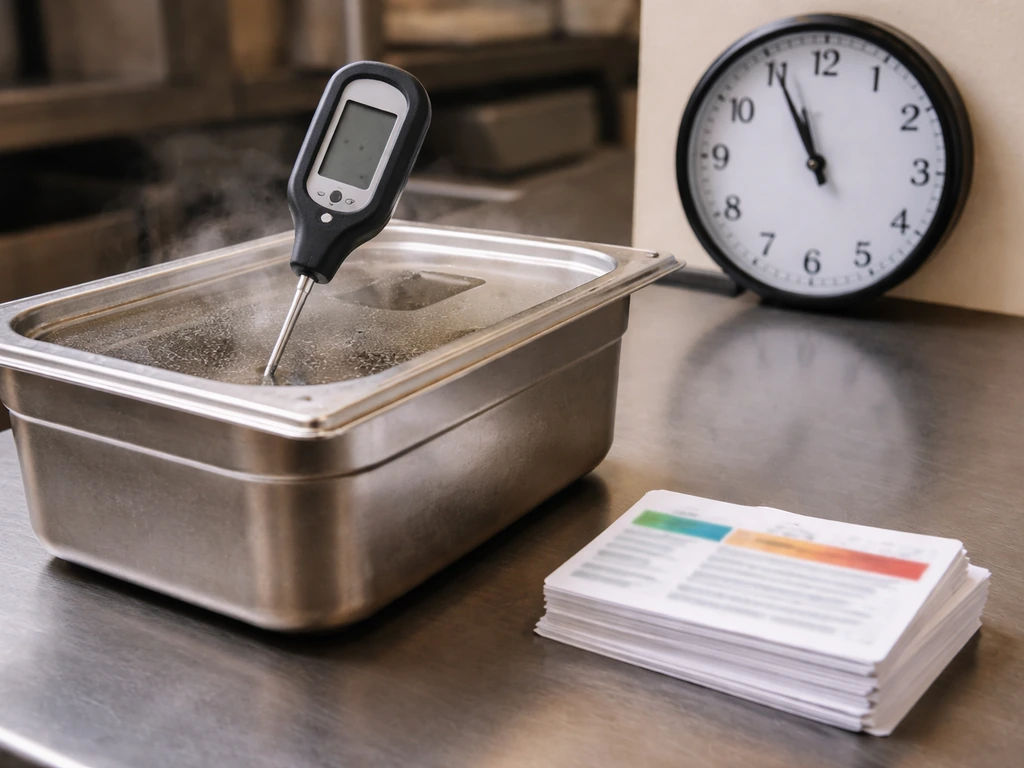
- Apply the Two-Hour Rule. Perishable foods left in the danger zone for more than two hours should be discarded. In environments above 90°F (such as outdoor events or hot kitchens), cut that window to one hour.
- Divide large portions before refrigerating. A large pot of soup or a whole roasted bird will take far too long to cool if stored as a unit. Divide into shallow containers no more than 2 to 3 inches deep to allow heat to escape quickly.
- Monitor time, not just temperature. Even if you're uncertain about an exact temperature reading, knowing how long food has been out of temperature control gives you critical decision-making information.
- Keep raw proteins separated from ready-to-eat foods in the refrigerator. Cross-contamination can introduce pathogens into foods that won't be cooked before eating.
How to Heat, Cool, and Hold Food Safely
Time and temperature control has to cover the full lifecycle of a dish, not just the initial cook. The most dangerous window is often the cooling phase, when hot food is moving through the danger zone on its way to refrigeration temperature.
Cooling
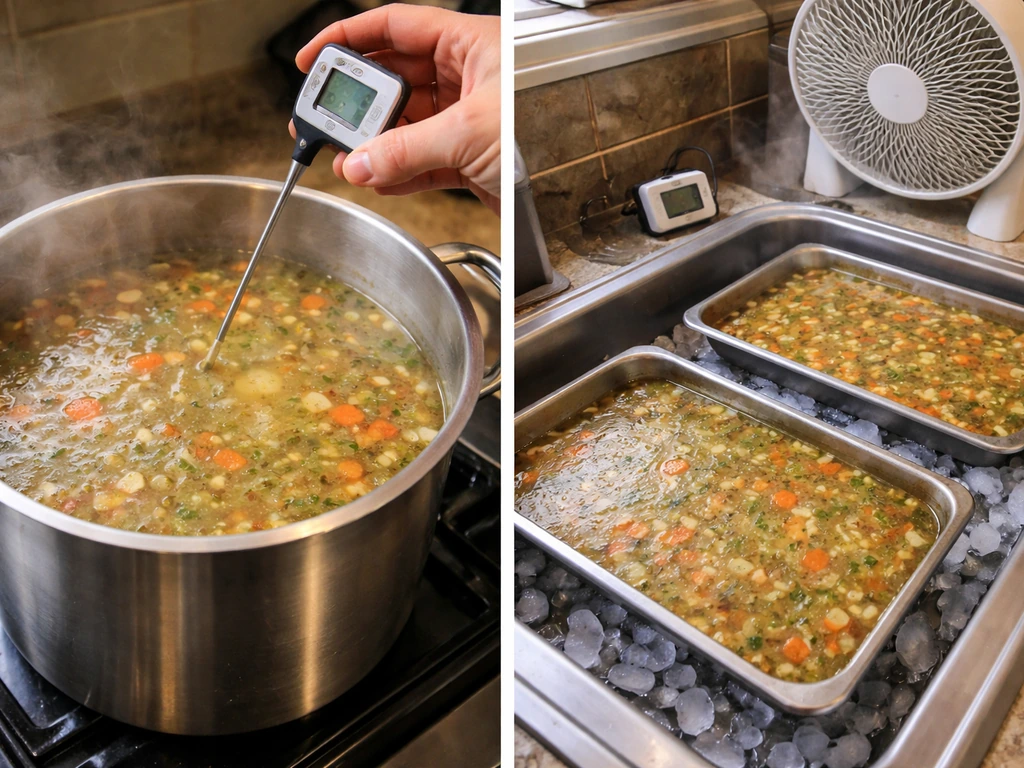
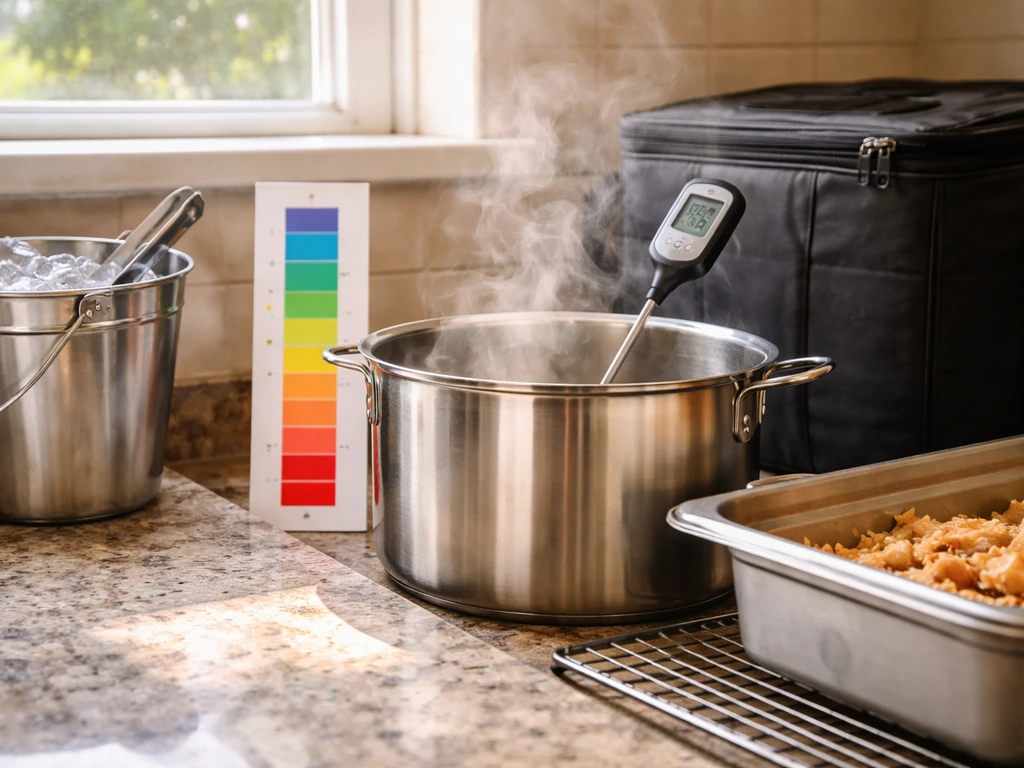
The FDA Food Code two-stage cooling requirement is the standard for food service operations and a solid model for anyone handling large quantities of food. Cool food from 135°F down to 70°F within 2 hours, then from 70°F down to 41°F within an additional 4 hours, for a total cooling time of no more than 6 hours. The first stage (135°F to 70°F) is the most critical because bacterial growth is fastest in that upper zone. Methods that help include ice baths, blast chillers, shallow containers, and stirring to release heat. Never leave a large covered pot on the counter to cool on its own.
Reheating
For any food that will be placed back into hot holding, the FDA Food Code requires reheating to 165°F (74°C) for a minimum of 15 seconds (per section 3-403.11). This applies to leftovers, previously cooked foods, and commercially prepared foods being reheated for service. The USDA makes the same recommendation for consumer use: reheat until food reaches 165°F internally, confirmed with a thermometer. For microwave reheating, stir food partway through to address cold spots, then let it rest covered for a minute before checking the temperature.
Hot and Cold Holding
Hot holding means maintaining cooked food at or above 135°F during service or transport. Cold holding means keeping food at or below 41°F. Neither is a passive process. Hot holding equipment needs to be preheated before food goes in. Refrigerators and cold holding units need to be verified, not assumed. Packing too much warm food into a refrigerator at once can raise the internal temperature of the unit and push other stored foods temporarily into the danger zone.
Cold Growth, Spores, and the Pathogens That Don't Follow the Rules
Temperature control is highly effective against most pathogens, but two categories of organisms complicate the picture: psychrotrophs (cold-tolerant bacteria) and spore-formers.
Psychrotrophs
Listeria monocytogenes is the most clinically important cold-tolerant pathogen in food safety. It can grow at temperatures as low as 31.3°F (−0.4°C) and has a documented growth range extending to −1.5°C in some research. Standard refrigeration at 40°F slows Listeria significantly but doesn't stop it entirely. This is why ready-to-eat foods with extended refrigerated shelf lives (deli meats, soft cheeses, smoked seafood) carry specific Listeria risk, and why immunocompromised individuals, pregnant people, and the elderly are advised to take extra precautions with those food categories.
Spore-Formers
Bacillus cereus and Clostridium species (including C. perfringens and C. botulinum) produce spores that can survive cooking temperatures that kill vegetative bacterial cells. When food cools back into the danger zone, those spores can germinate and grow. Bacillus cereus is particularly relevant in cooked rice and starchy foods left at room temperature. Clostridium perfringens is a major cause of illness from large-batch cooked meats (think buffet-style roasts or stews that are held warm for too long or cooled improperly). The response to spore-formers is not about hitting a kill temperature once: it's about preventing post-cook time in the danger zone.
Heat-Stable Toxins
Staphylococcus aureus produces a toxin during growth that is heat-stable, meaning reheating food to 165°F will kill the bacteria but not neutralize the toxin already present. This is why prevention (keeping food out of the danger zone) matters more than correction (reheating) for S. aureus-related risk. Once the toxin is there, you can't cook your way out of it.
When Food May Have Been in the Danger Zone: Risk-Based Decisions
If you're not sure whether food has been in the danger zone too long, there's a straightforward framework for making the call. The key point is that you cannot rely on smell, appearance, or taste to determine safety. Pathogenic bacteria don't reliably produce off-odors or visible spoilage. Food can look and smell completely normal while containing dangerous concentrations of pathogens or heat-stable toxins.
Under Two Hours: Generally Safe
If perishable food has been in the danger zone for less than two hours (one hour above 90°F), the risk of significant bacterial multiplication is low for most common pathogens, so keep food out of the conditions where bacteria may grow rapidly. Refrigerate promptly and consume within the expected safe storage window. This is the basis of the Two-Hour Rule from FoodSafety.gov and USDA FSIS guidance.
Two to Four Hours: Context-Dependent
Between two and four hours in the danger zone, risk increases meaningfully. Whether to discard or salvage depends on the food type, who will be eating it, and whether it will be cooked again. Ready-to-eat foods (salads, deli meats, soft cheeses) with no further cooking step should be discarded. Foods that will be thoroughly reheated to 165°F may be lower risk for healthy adults, but the caveat about heat-stable toxins (S. aureus, B. cereus) applies: if those organisms have had time to produce toxin, reheating won't help.
Over Four Hours: Discard
Food that has been in the danger zone for more than four hours should generally be discarded. The FDA Food Code includes explicit 'food shall be discarded' logic tied to time-temperature benchmarks. This is not a conservative or overly cautious recommendation: it reflects the actual doubling-time math for common pathogens in that temperature range. Four hours at room temperature can take a small contamination event to a dose capable of causing illness.
High-Risk Groups: Apply a Stricter Standard
Pregnant individuals, young children, older adults, and anyone who is immunocompromised face significantly higher risk from the same bacterial dose. For these groups, the threshold for discarding questionable food should be lower, not higher. When in doubt, the practical advice is simple: if you have to ask whether it's still safe, it's probably not worth keeping.
Understanding the conditions that drive pathogen growth, including pH ranges, water activity thresholds, and oxygen requirements alongside temperature, gives you a much stronger foundation for these decisions than following rules alone. The danger zone is a useful shorthand, but the fuller picture of how bacteria grow (and which ones can grow even when temperature is controlled) is what turns general food safety awareness into real protective practice.
FAQ
How can I tell if food was in the danger zone too long if it smells and looks fine?
No. Even if food tastes normal, pathogens can multiply, and some toxins are not destroyed by reheating. Use temperature, time, and whether the food will be re-eaten without further cooking (ready-to-eat foods) to make the call, not smell or appearance.
Does the danger zone rule apply while food is thawing, or only after cooking?
For frozen food, the danger zone clock starts when the food surface or center reaches about 40°F (or 41°F under the FDA Food Code benchmark). Food that is still fully frozen is not growing at meaningful rates, but food that is thawing on the counter can warm unevenly and create localized danger-zone conditions.
Why is cooling after cooking considered the riskiest step?
Yes. Cooling is usually where time-temperature control fails. Two common mistakes are cooling in deep containers (heat release is slow) and stirring too infrequently (it keeps hot pockets trapped). Shallow pans, ice baths, blast chilling, and frequent stirring when safe to do so are practical ways to reduce the time spent near the fastest growth temperatures.
If I reheat food to 165°F, does that always make it safe again?
Reheating to 165°F helps for many bacteria, but it does not reliably remove heat-stable toxins already produced by Bacillus cereus or Staphylococcus aureus. Also, if bacteria grow during the unsafe holding window, you can reheat the cells and still be left with a toxin problem.
What’s the safest way to handle food during a party or buffet setup when service might be delayed?
Not if the goal is safety. Food that will be eaten hot must be kept at or above 135°F during holding, and cold foods must be kept at or below 41°F. “Warm on the counter” or “covered near the stove” often drifts into the danger zone without anyone noticing.
Does vacuum-sealed or restaurant-style packaged food stay safe longer once opened?
Vacuum sealing or modified-atmosphere packaging mainly changes oxygen availability. It can reduce growth of aerobes, but if temperature control fails, it can also create conditions that allow anaerobic or microaerophilic pathogens to grow. Packaging is not a substitute for strict time and temperature control.
Why do microwaved leftovers still sometimes cause issues, and how should I check temperature?
Yes, especially with leftovers reheated in microwaves. Microwaves heat unevenly, so you need to stir partway through and then let the food rest briefly before checking the internal temperature. Check with a thermometer at the coldest-looking spot, not just the center.
Can poor equipment setup, like overpacked fridges or unpreheated hot holding units, cause danger zone exposure?
Yes, and it can happen in both directions. Overpacking refrigerators reduces airflow and can raise internal temperatures, pushing some stored items toward the danger zone. Hot-holding equipment that is not preheated can also fail to reach and maintain the required hot temperature quickly enough.
How do I decide whether to discard or salvage food after 2 to 4 hours in the danger zone?
It depends on the food type and whether there is a subsequent kill step. Ready-to-eat foods that have no further cooking step are generally the safest to discard after longer time in the danger zone. If food will be thoroughly reheated, the risk may be lower for many pathogens, but toxin-former scenarios still require discard-focused thinking.
If food was briefly in the danger zone, is it okay to freeze it later to make it safe?
In most home situations, you should not try to “rescue” foods by tasting, freezing, or storing “a little longer.” Freezing after unsafe holding does not remove toxins, and it does not reverse growth that already happened. Use time-temperature exposure to decide, then store properly afterward.
Why is refrigeration not always enough, especially for ready-to-eat deli foods?
Some pathogens can keep growing in the refrigerator, most notably Listeria in ready-to-eat refrigerated foods. That means refrigeration slows growth, but it is not a guarantee of safety over time. Follow the specific shelf-life guidance for those products and keep the refrigerator as cold as your setting allows.
Next Article
Do Germs Grow in Hot or Cold? Temperature and Food Safety
See how hot and cold affect germ growth, which microbes thrive in each, and safe food temps to prevent illness.