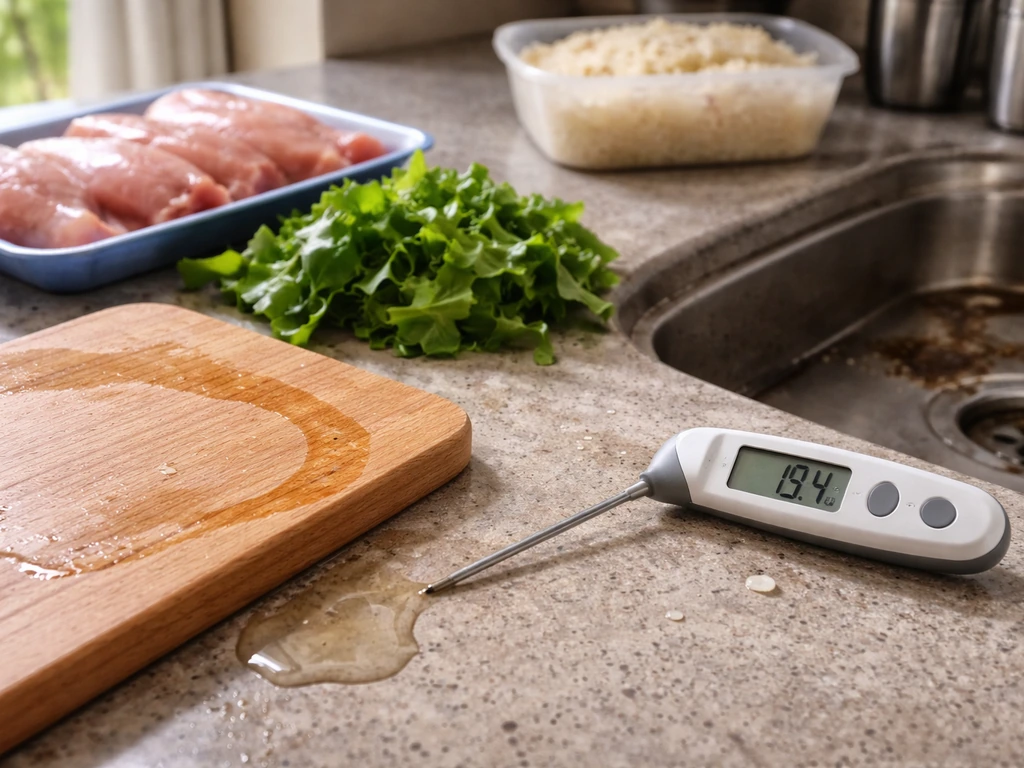
Most foodborne pathogens grow most quickly between 70°F and 125°F (21°C to 52°C). That is the sweet spot where the biology lines up perfectly: enzymes work fast, membranes stay fluid, and bacteria can double in population every 20 minutes or less. Outside that core range, growth slows dramatically, but the sweet spot where the biology lines up perfectly is where pathogens grow fastest. Below 40°F (4°C) most pathogens crawl to a near halt. Above 140°F (60°C) most are killed outright. Everything in between is, quite literally, the danger zone.
At What Temperatures Do Most Foodborne Pathogens Grow

Marcus Reeves
24 Mar 2026
Why temperature controls how fast foodborne pathogens multiply
Temperature is the single most powerful lever you have over bacterial growth in food. Here is why: bacteria are <anchor>cold-blooded</anchor> in the most extreme sense. They have no internal thermostat. Every chemical reaction inside a bacterial cell, from building new proteins to copying DNA, speeds up or slows down in direct proportion to the surrounding temperature. Drop the temperature and cell membranes become less fluid, nutrient uptake gets sluggish, and enzymes lose efficiency. Raise it too high and those same proteins start to denature and fall apart. There is a narrow thermal window where everything works at peak efficiency, and that window sits squarely in the range of temperatures food commonly sits at during preparation, transport, and service.
This is not just theory. A documented doubling time for Salmonella at its optimum temperature is under 20 minutes. That means a small inoculum of a few hundred cells left on a cutting board or in a pot of rice cooling on the counter can become millions within just a few hours. Temperature abuse, even a modest shift from 40°F to 50°F in your refrigerator, changes the risk profile in a real and measurable way.
The danger zone: what the range 40°F to 140°F actually means
The USDA defines the danger zone as 40°F to 140°F (4°C to 60°C). The FDA Food Code and USDA FSIS both use this range as the core control parameter for time-temperature sensitive (TCS) foods. Food left in this range for more than 2 hours is considered a risk. If the ambient temperature climbs above 90°F, that window shrinks to just 1 hour.
The 40°F lower bound is not arbitrary. Below that temperature, the vast majority of foodborne pathogens either stop growing entirely or grow so slowly that the risk over a normal refrigerator shelf life becomes manageable. The 140°F upper bound reflects the temperature at which the active killing of most vegetative bacterial cells begins to occur quickly enough to matter in a practical holding scenario.
Within the danger zone, not all temperatures are equally risky. The zone between roughly 70°F and 125°F is where most of the organisms you actually worry about, Salmonella, E. coli O157:H7, Staphylococcus aureus, Clostridium perfringens, grow at their fastest. The lower and upper ends of the danger zone (just above 40°F or just below 140°F) still support growth, but at slower rates.
Optimal growth temperatures for major foodborne bacterial pathogens
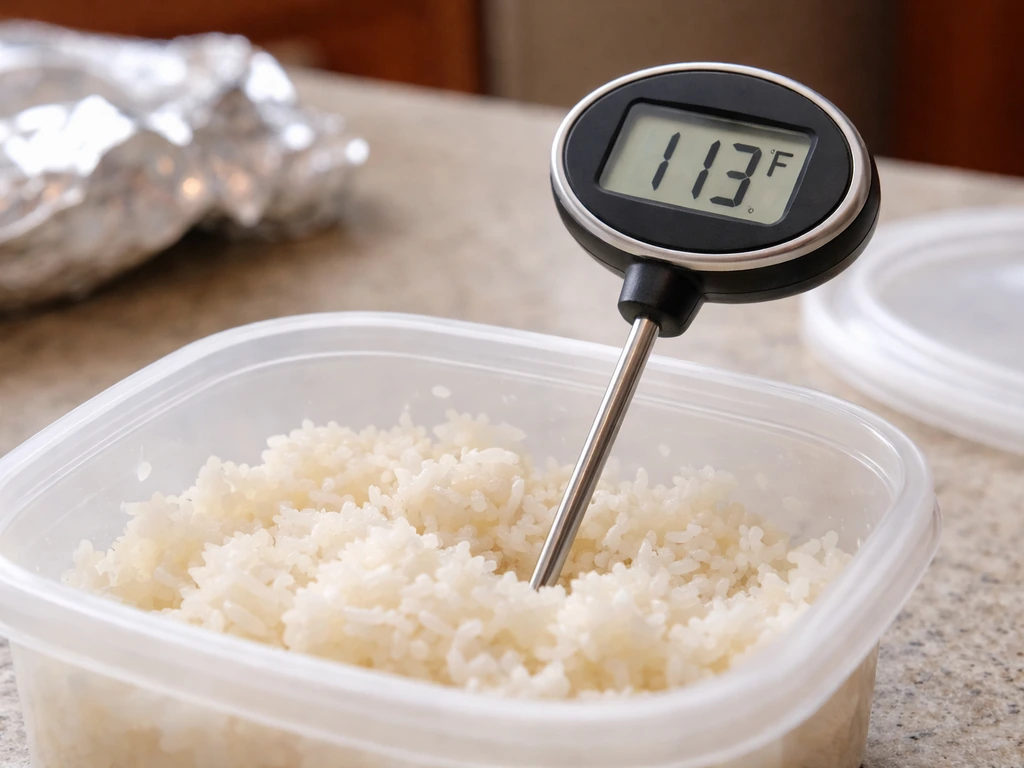
Most of the pathogens responsible for the majority of foodborne illness outbreaks are mesophiles, meaning they thrive at warm body temperatures. Their optimal growth temperatures cluster tightly around 35°C to 43°C (95°F to 109°F), roughly the temperature of the human gut and of food sitting in a warm kitchen or steam table that has drifted below safe holding temperature. The table below shows representative minimum, optimum, and maximum growth temperatures for the most common culprits.
| Pathogen | Min Growth Temp | Optimum Growth Temp | Max Growth Temp |
|---|---|---|---|
| Salmonella spp. | 41°F (5.2°C) | 95–109°F (35–43°C) | 115°F (46°C) |
| E. coli O157:H7 (STEC) | 45°F (7°C) | 98.6°F (37°C) | 122°F (50°C) |
| Staphylococcus aureus | 44.6°F (7°C) | 98.6°F (37°C) | 118°F (48°C) |
| Listeria monocytogenes | 30°F (-1.5°C) | 86–98.6°F (30–37°C) | 113°F (45°C) |
| Clostridium perfringens | 50°F (10°C) | 109–117°F (43–47°C) | 125°F (52°C) |
| Campylobacter jejuni | No growth below 86°F (30°C) | 108–113°F (42–45°C) | 119°F (47°C) |
| Bacillus cereus | 39–43°F (4–6°C) | 86–95°F (30–35°C) | 131°F (55°C) |
A few things stand out in this table. Clostridium perfringens has an unusually high optimum, growing fastest in the 43°C to 47°C (109°F to 117°F) range. This is why slow cookers set too low and large trays of cooked meat cooling on a counter are a specific Clostridium perfringens risk: those conditions hit its sweet spot. Campylobacter, on the other hand, will not grow at all below 30°C (86°F), which means it is primarily a concern during cooking and cross-contamination, not during normal refrigeration.
Staphylococcus aureus is worth flagging separately. Its growth optimum is around body temperature, but the real danger is its toxin. S. aureus produces a heat-stable enterotoxin during growth that survives cooking even after the bacteria themselves are killed. If food was temperature-abused before cooking, the toxin may already be present and the food is still unsafe even after thorough heating.
Pathogens that grow in the fridge: psychrotrophs and the Listeria problem
The refrigerator is not a kill step, it is a slow step. Most foodborne pathogens grow so slowly below 40°F (4°C) that the risk over a few days of storage is low. But a small group of organisms are classified as psychrotrophs, meaning they are cold-adapted and can grow, sometimes meaningfully, at refrigeration temperatures.
Listeria monocytogenes is the most important example in food safety. Its documented minimum growth temperature is -1.5°C (about 29°F), and it actively grows at 4°C to 10°C (39°F to 50°F). Research comparing refrigerator storage at 4°C versus 8°C in deli meats and dairy products found that even a 4-degree Celsius temperature increase significantly reduced the time needed for Listeria to reach high population densities. At a typical deli meat storage temperature of 7°C, Listeria populations increased measurably over normal shelf-life periods in some formulations.
This is precisely why ready-to-eat, refrigerated foods with long shelf lives, smoked salmon, soft cheeses, deli sliced meats, are categorized as Listeria risk foods. They spend extended time in the cold chain where most pathogens are stopped but Listeria keeps moving, slowly.
The practical takeaway: keeping your refrigerator at or below 40°F (4°C) does not eliminate Listeria risk in long-shelf-life RTE foods, but it slows growth dramatically compared to even 45°F or 50°F. A refrigerator running at 45°F is not just slightly worse, it changes the risk curve for psychrotrophs in a meaningful way. Use a thermometer. The USDA and FDA both specify 40°F or below as the target, not just roughly cold.
E. coli O157:H7 and Salmonella are not psychrotrophs. Their documented minimum growth temperatures are around 7°C and 5.2°C respectively, which means they can technically start growing in a refrigerator that is running slightly warm. Below 4°C, however, growth is negligible for these organisms under practical conditions. They are primarily a concern in the middle and upper portions of the danger zone.
How to use this in real food handling decisions
Knowing the temperature ranges translates directly into better decisions at every step of food handling. Here is how to apply it.
Refrigeration
Keep your refrigerator at 40°F (4°C) or below throughout the unit, not just at the thermostat sensor. The back and center of the fridge are typically colder than the door and the shelf just inside the door. The FDA recommends using a standalone refrigerator thermometer to verify actual temperature, not just relying on the dial setting. For ready-to-eat foods with any extended shelf life, pushing toward 38°F (3.3°C) is a better target than sitting right at 40°F.
Hot holding
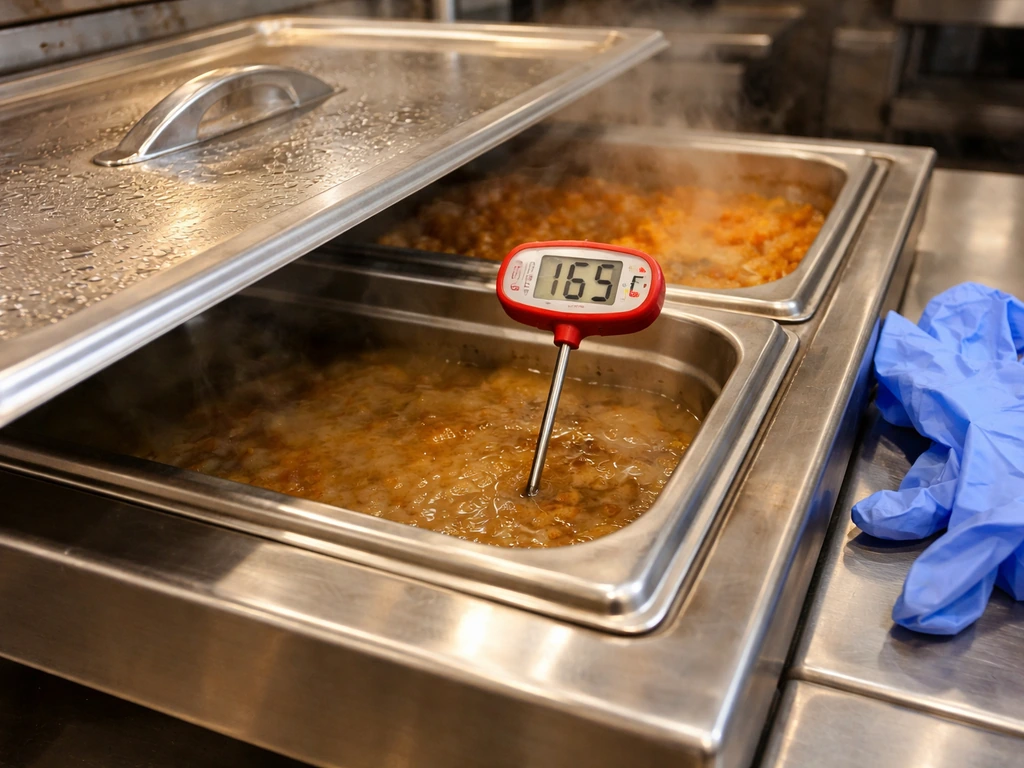
Hot food needs to stay at 140°F (60°C) or above. That is the point where Clostridium perfringens, the most heat-tolerant of the fast-growing mesophiles, cannot sustain active growth. Steam tables, chafing dishes, and slow cookers used for holding (not cooking) must be monitored with a thermometer, not guessed. A steam table set to low that lets food drift to 120°F is sitting in Clostridium perfringens's optimum growth zone.
Cooling cooked food
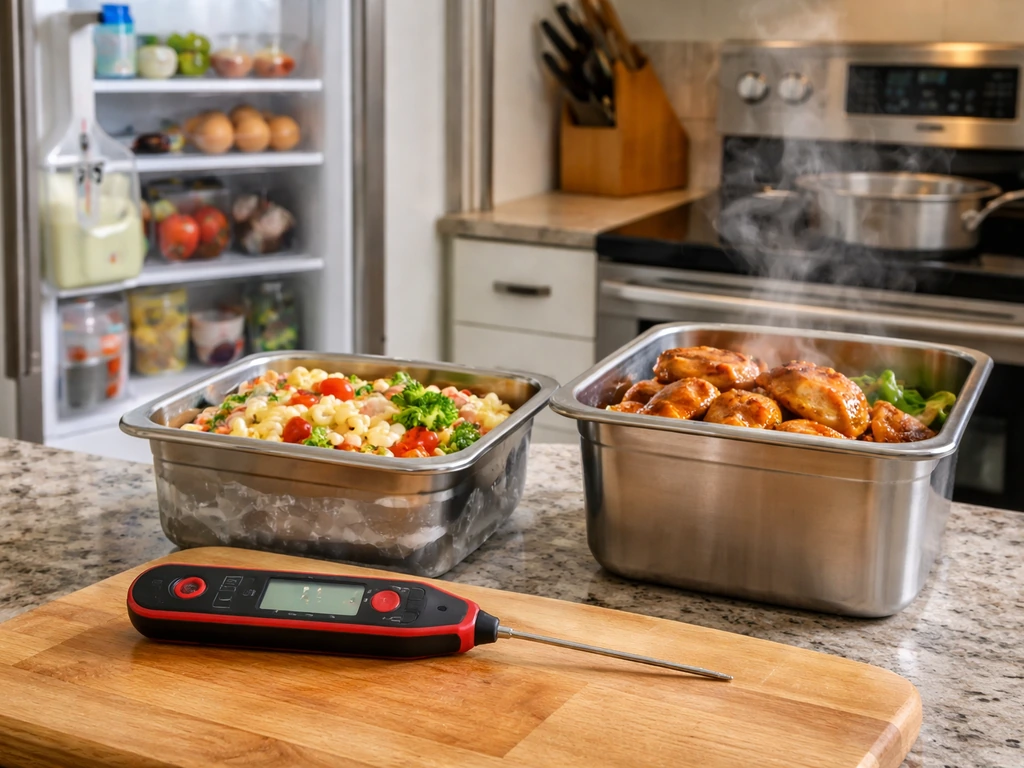
The FDA Food Code 2022 sets a two-stage cooling requirement for TCS foods: from 135°F to 70°F within 2 hours, and then from 70°F to 41°F within an additional 4 hours, for a total of 6 hours. These are not suggestions. The 135°F to 70°F window is critical because that range passes through the core mesophile growth zone at its fastest. A large pot of soup cooling uncovered on a counter can take 6 hours just to get to 70°F on its own, never mind reaching 40°F. To cool fast enough, divide food into shallow containers (no more than 2 inches deep), use an ice bath, or use a blast chiller if available.
Thawing
Thawing on the counter is the most common mistake people make. As the outer layer of a frozen food warms into the danger zone while the center is still frozen, you get surface temperatures in the 50°F to 70°F range that bacteria may grow rapidly in Safe thawing options are: in the refrigerator, submerged under cold running water at or below 70°F (and the thawed outer portions should not sit above 41°F for more than 4 hours), or as part of the cooking process itself. Thawing in the microwave is safe only if you cook the food immediately afterward.
Reheating
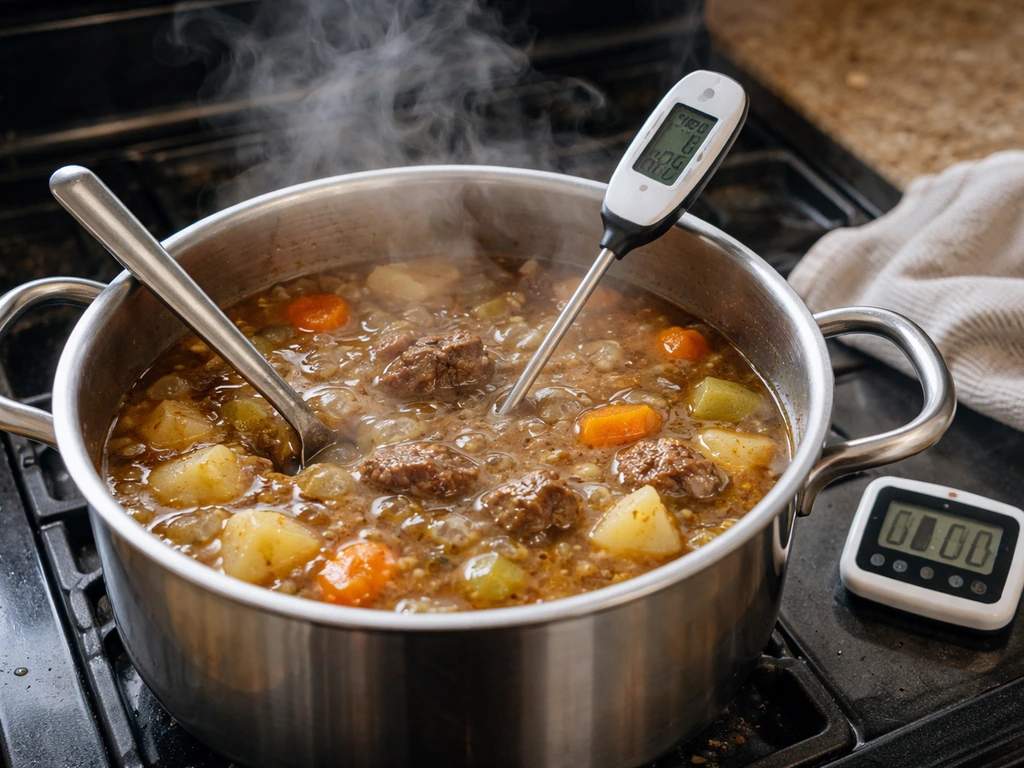
Reheating is not just about getting food hot, it is about getting it hot fast enough to pass through the danger zone quickly. The FDA Food Code requires that food being reheated for hot holding reach 165°F (74°C) in all parts within 2 hours. If reheating is slow, such as placing cold food directly into a steam table, the food can sit in the 70°F to 125°F range for an extended period, which is exactly the growth window for most mesophilic pathogens. Reheat on the stovetop or in the oven first, then transfer to the holding equipment.
The short version, if you want a quick reference
- Most foodborne pathogens grow fastest between 70°F and 125°F (21°C to 52°C).
- The official danger zone is 40°F to 140°F. Food in this range for more than 2 hours (or 1 hour above 90°F) is a risk.
- Listeria monocytogenes is the main exception: it grows in the refrigerator, slowly but meaningfully.
- Refrigerators should be at or below 40°F throughout the unit, verified with a thermometer.
- Hot food must stay at 140°F or above; cool cooked food from 135°F to 41°F within 6 hours total.
- Never thaw food on the counter. Use the fridge, cold running water at or below 70°F, or cook from frozen.
- Reheat food to 165°F in all parts before holding; do not try to reheat in a steam table.
Temperature is not the only factor that affects pathogen growth, pH matters too, and in general pathogens grow very slowly at what ph level. pH, water activity, and food composition all play a role, and those factors interact with temperature in ways that can either amplify or reduce risk. But temperature is the factor you can control most directly, and it is the one that has the largest effect on how fast pathogens move from a safe level to a dangerous one. Getting the numbers right here is foundational to everything else in food safety. pathogens grow best in food with little or no acid
FAQ
If most pathogens grow fastest between 70°F and 125°F, why does temperature alone not guarantee safety?
Because bacteria growth rate also depends on how many cells are already present and how fast heat or chilling moves through the food. Even if the average temperature stays in a “safer” range, thick foods and poor stirring can leave pockets that linger in the fastest-growth window long enough to build risky populations.
Does the “danger zone” apply to both whole foods and ground or sliced foods?
Not equally. Ground, chopped, and sliced foods have much more surface area and less intact structure, so they warm and cool faster, but they also allow bacteria to spread more quickly through the food. That means the fastest-growth range can be reached across the product sooner, so time control matters more.
How can I tell whether my refrigerator is actually keeping food below 40°F, since the article mentions the thermostat?
Check with a thermometer placed in the coldest stable area you commonly store food, and also note where your door shelf sits. Thermostat readouts can be off, and the door or top shelf often runs warmer, which is where psychrotroph risk foods like deli meats tend to sit.
What’s the risk difference between letting food cool at room temperature versus using an ice bath or shallow containers?
Room temperature cooling tends to keep the surface and interior in the fastest-growth band longer. Shallow containers and ice-bath pre-chilling reduce the time food spends passing through that high-growth temperature range, which is where doubling happens quickly.
Is it ever safe to reheat something that was left out, as long as the final temperature reaches 165°F?
Reaching 165°F in all parts helps, but it may not make everything safe. Some hazards involve toxins (for example, toxin produced before heating) and not just living bacteria, so the best practice is to avoid leaving TCS foods in the danger zone in the first place.
How long can thawed food sit in the danger zone before it becomes unsafe, even if it’s still cold in the middle?
Surface temperatures are what matter first. Once the outer layer reaches growth-friendly temperatures, pathogens can multiply while the center is still frozen. Use the 4-hour limit for holding above 41°F, and generally avoid letting thawed product sit before cooking beyond that window.
Do microwaves make thawing unsafe because they don’t warm evenly?
Microwaves can create warm pockets that enter the fast-growth range while other areas remain frozen. The key is immediate cooking after microwave thawing, since waiting allows warmed surfaces to support growth.
If Clostridium perfringens can grow at higher optima, does that mean hot holding at 140°F is always enough?
Holding at 140°F or above is the standard because it prevents that organism from maintaining active growth. The practical issue is equipment performance, food depth, and how often food is transferred or stirred, since large, dense portions can cool faster than expected and drift into growth-favorable temperatures.
What about soups and stews, does stirring help or can it make things worse?
Stirring can help reduce temperature gradients, but it does not replace time and proper cooling methods. If you stir too late or keep the pot too deep, the center can remain in the growth window. Better controls are shallow containers and validated cooling targets.
Can pathogens grow during freezing, since some organisms are cold-adapted?
Freezing generally stops growth because biological processes slow drastically, but it does not kill all pathogens. Cold-adapted organisms like Listeria can resume growth after thaw, which is why proper thawing and cold storage after thawing still matter.
Is it safe to rely on “smells done” or texture as an indicator that bacteria have not grown?
No. Many pathogens do not change flavor, smell, or texture in ways you can detect. Temperature and time limits are the reliable controls, especially for situations like cooling, thawing, and hot holding where growth can occur without obvious spoilage.
Are there special temperature considerations for foods with high sugar or high salt?
Yes, pH and food composition can slow or stop growth even when temperature is in the danger range. However, you should not assume safety, because not all pathogens are equally inhibited, and many real foods have enough water activity for growth, especially when temperature abuse occurs.
Next Article
Where Do Pathogens Grow Best: Conditions and Food Hot Spots
Learn where pathogens grow best by mapping temperature, pH, moisture, nutrients and oxygen to real food hot spots.