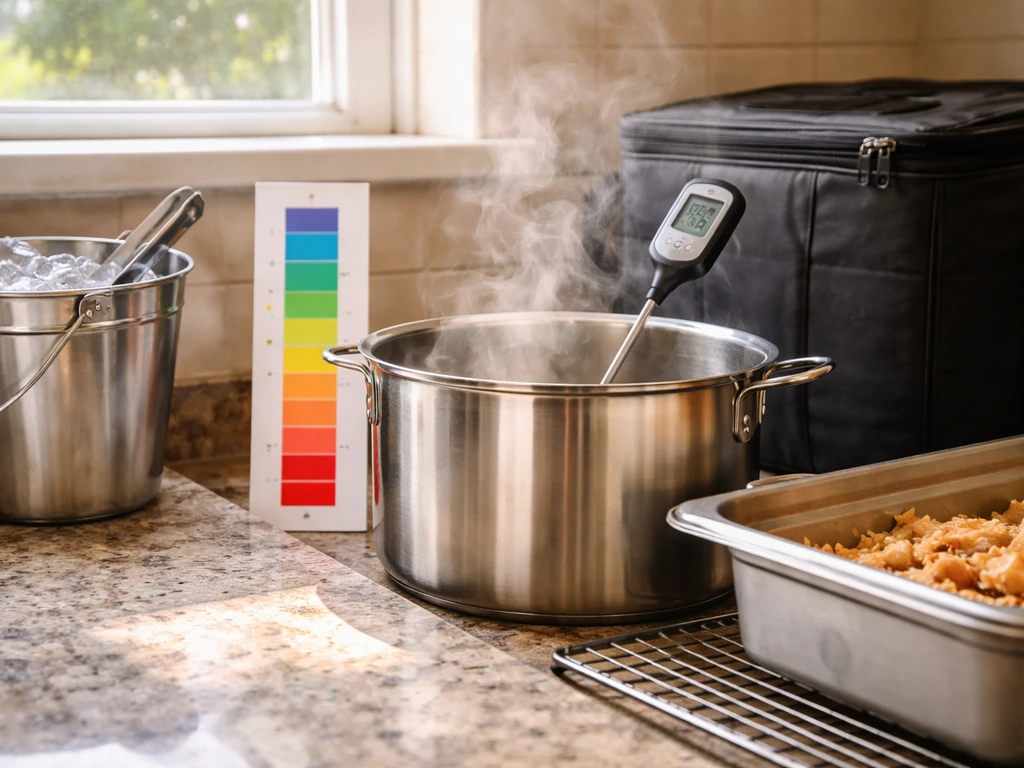
Most foodborne pathogens grow best in foods with little or no acid, meaning foods with a pH above 4.6. That single number, 4.6, is the regulatory cutoff the FDA uses to define a "low-acid food," and it matters because below that threshold most dangerous bacteria either stop growing or grow so slowly they rarely cause illness. Above it, the chemistry is far friendlier to pathogens, and that is where the real risk lives. Understanding why that happens, and what you can do about it today, is the core of practical food safety.
Pathogens Grow Best in Low-Acid Foods: pH and Control Steps

Marcus Reeves
24 Mar 2026
Why low-acid foods let pathogens grow
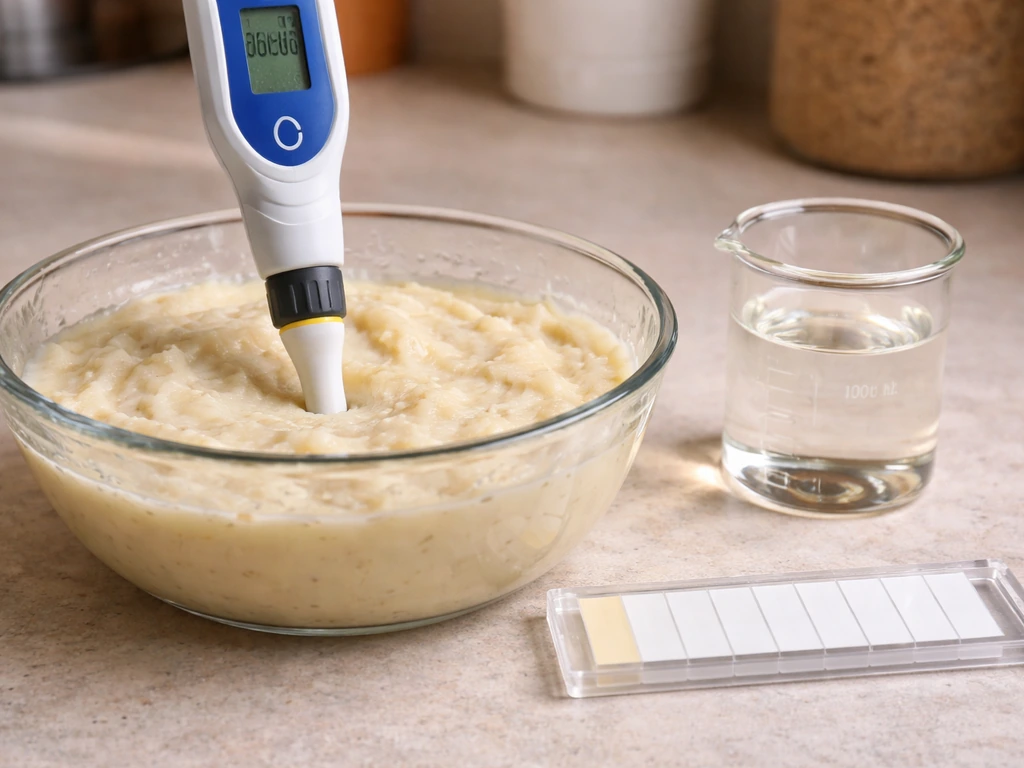
Acid works against bacteria in a straightforward way. When the pH of a food drops, hydrogen ions accumulate and disrupt the internal chemistry of bacterial cells. Most pathogens have to spend energy maintaining their internal pH at a level that keeps their enzymes working, and at low external pH that becomes impossible. Growth slows, then stops, then the cells start dying. That is why vinegar, citric acid, and fermentation have been used to preserve food for centuries.
At pH 4.6 and below, even heat-resistant spore-forming bacteria like Clostridium botulinum cannot germinate and produce toxin under normal storage conditions. This is why a jar of properly acidified pickles sitting on a shelf is far safer than a jar of canned green beans processed the same way. The green beans have a pH well above 4.6. The pickles do not.
The flip side is equally important: most low-acid foods, everything from cooked chicken to steamed rice to fresh-cut melon, sit comfortably in the pH 5.5 to 7.0 range where pathogens not only survive but actively thrive. There is nothing chemically hostile about those foods, so all the other conditions, temperature, moisture, time, and oxygen, become the decisive factors.
Key pH ranges: common foodborne pathogens and their acid tolerance
Each pathogen has its own pH window for growth, and those windows are not identical. Knowing where they overlap with your food's actual pH is how you identify the real risk in any given situation.
| Pathogen | Minimum pH | Optimum pH | Maximum pH | Notable point |
|---|---|---|---|---|
| Salmonella spp. | 3.8 | 7.0–7.5 | 9.5 | Min pH shifts higher at lower temperatures |
| Listeria monocytogenes | 4.39 | 7.0 | 9.4 | Unusually tolerant of mild acid and cold |
| E. coli (pathogenic) | 4.4 | 6.0–7.0 | 9.0 | Some strains more acid-tolerant than others |
| Staphylococcus aureus | 4.0 | 6.0–7.0 | 10.0 | Toxin production requires pH closer to neutral |
| Bacillus cereus | 5.0 | 6.0–7.0 | 8.8 | Spore-former; emetic toxin preformed in food |
| Clostridium perfringens | 5.0–5.5 | 7.0–7.5 | 8.0–9.0 | Strictly anaerobic; thrives in cooked meats |
| Clostridium botulinum | ~4.6 (threshold) | ~7.0 | ~8.5 | Below pH 4.6 toxin production essentially stops |
A few things stand out in that table. Salmonella has the lowest documented minimum pH of the group at 3.8, but that number is under ideal lab conditions. In real food, FSANZ data confirms that the minimum growth pH for Salmonella rises when temperature drops, meaning the thresholds interact. Listeria is often called the most dangerous in low-acid, cold environments because it keeps growing down to about 4.39 pH and remains active at refrigerator temperatures. Staphylococcus aureus can grow at pH 4.0, but its toxin production requires conditions closer to neutral pH, so a mildly acidic food might still harbor the bacteria without as much toxin risk.
The practical takeaway is that virtually every major foodborne pathogen has an optimum pH between 6.0 and 7.5. That range covers most cooked foods, raw proteins, dairy, and produce. If your food lands in that zone and you add warmth and time, you have created nearly perfect growth conditions.
Other growth factors that team up with low pH
pH does not work alone. Microbial growth in food is driven by several factors simultaneously, and the interaction between them is what determines whether a pathogen actually grows or stays dormant. This is called the "hurdle concept" in food science: stack enough unfavorable conditions and you stop growth even when no single condition is fully inhibitory on its own.
Water activity (moisture available to microbes)
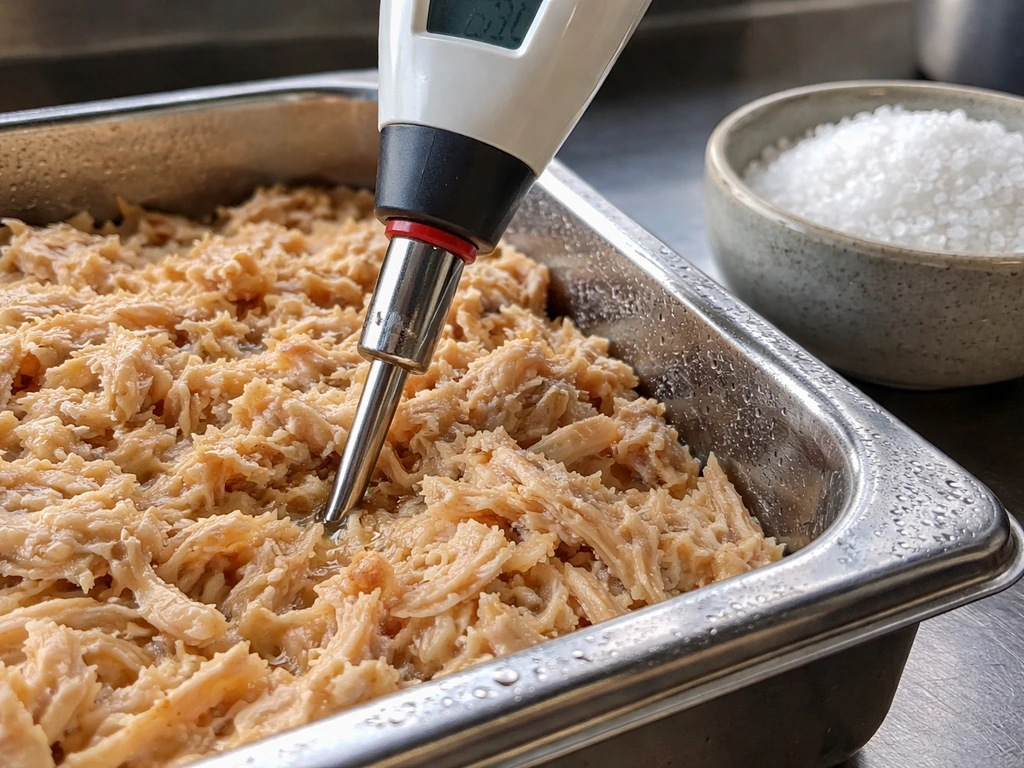
Water activity (aw) measures how much free water is available for microbial use, on a scale from 0 to 1.0. Most pathogens need aw above 0.91 to 0.95 to grow. Low-acid foods that are also high in moisture, like cooked beans, fresh pasta, or poached chicken, sit at aw close to 1.0, which removes another protective barrier. By contrast, a low-acid food that is also low in water activity, like a dry-cured sausage or hard cheese, may be safer despite a neutral pH because moisture is unavailable. The FDA notes that pH and water activity together determine hazard potential, and neither factor alone tells the full story.
Nutrients and food composition
Pathogens need nutrients just like any organism. Low-acid foods rich in protein, fat, and carbohydrates, think cooked meat, dairy, eggs, and cooked grains, are essentially perfect growth media. The nutrient density of these foods means bacteria have everything they need once pH and temperature are favorable. High-protein foods in particular tend to be low-acid and nutrient-dense at the same time, which is why they appear on every list of high-risk foods.
Oxygen availability
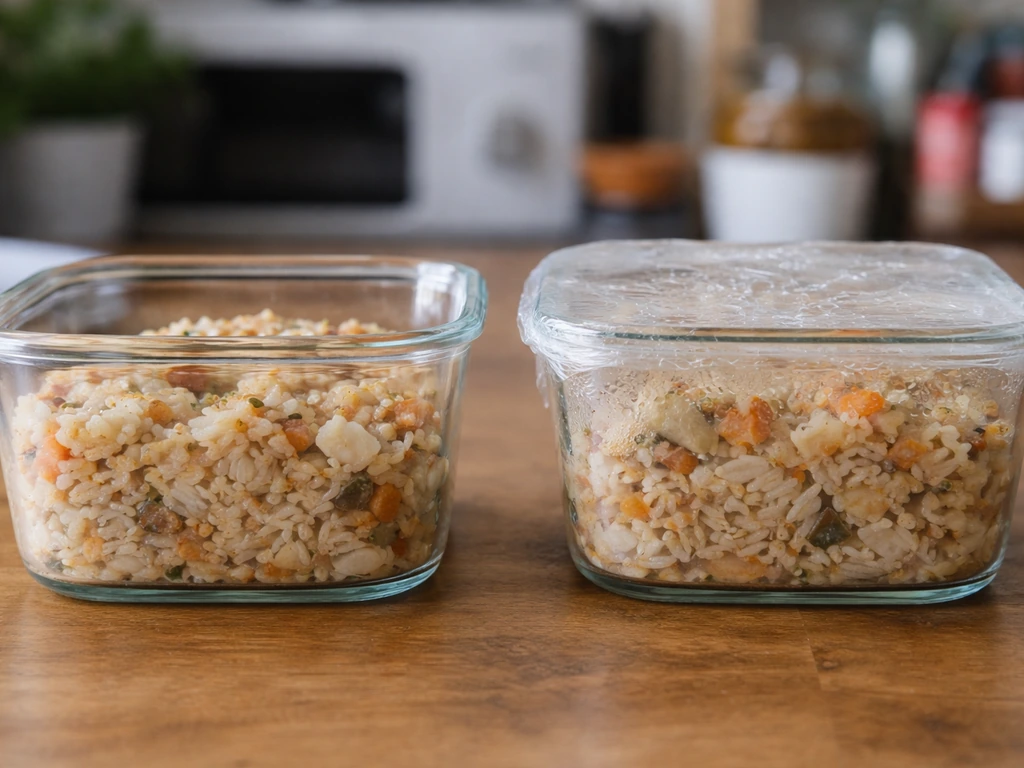
Whether a food environment is aerobic or anaerobic changes which pathogens dominate. Clostridium perfringens and Clostridium botulinum are anaerobes, meaning they prefer or require low-oxygen environments. Vacuum-packed low-acid foods, improperly canned goods, and the interior of large masses of cooked food are exactly the kind of oxygen-depleted environments where these organisms thrive. Aerobic pathogens like Salmonella and Listeria prefer oxygen but can tolerate reduced-oxygen environments as well.
Microbial competition
In raw, unprocessed low-acid foods, competing microorganisms, lactic acid bacteria, yeasts, and other benign spoilage organisms, create natural competition that can slow pathogen growth. When you cook a low-acid food, you eliminate that competition while leaving the food at a neutral pH and high aw. That is one reason freshly cooked food held at warm temperatures is such a reliable vector for foodborne illness: you have removed the competition and left the field wide open.
High-risk low-acid food categories and realistic contamination scenarios
Knowing which foods are most vulnerable in practice is more useful than memorizing pH tables. Here are the categories that consistently show up in outbreak data and why they are risky.
- Cooked poultry and meat (pH 5.5–6.5): High protein, neutral pH, high aw. Risk from Salmonella, Listeria, C. perfringens, and S. aureus. Contamination often happens after cooking during handling or slicing.
- Cooked rice and pasta (pH 6.0–7.0): Classic vehicle for Bacillus cereus. Spores survive cooking, germinate as the food cools slowly at room temperature, and produce toxin.
- Fresh dairy products like soft cheese, ricotta, and cream (pH 5.5–6.8): High aw, neutral pH, and rich nutrients make these prime environments for Listeria and Salmonella.
- Raw and lightly cooked eggs (pH 7.6–8.0 albumen): Slightly alkaline, high aw, high protein. Salmonella Enteritidis can be present inside the shell.
- Fresh-cut melons and leafy greens (pH 5.5–6.5): Cutting damages the surface, releasing nutrients and moisture. Salmonella and Listeria grow readily at room temperature.
- Canned low-acid vegetables (home-canned or improperly processed): The primary C. botulinum concern. Anaerobic environment plus neutral pH plus heat-resistant spores is a dangerous combination.
- Deli meats and ready-to-eat proteins: Even refrigerated, Listeria can multiply slowly. Long storage times at 38–40°F allow accumulation to dangerous levels.
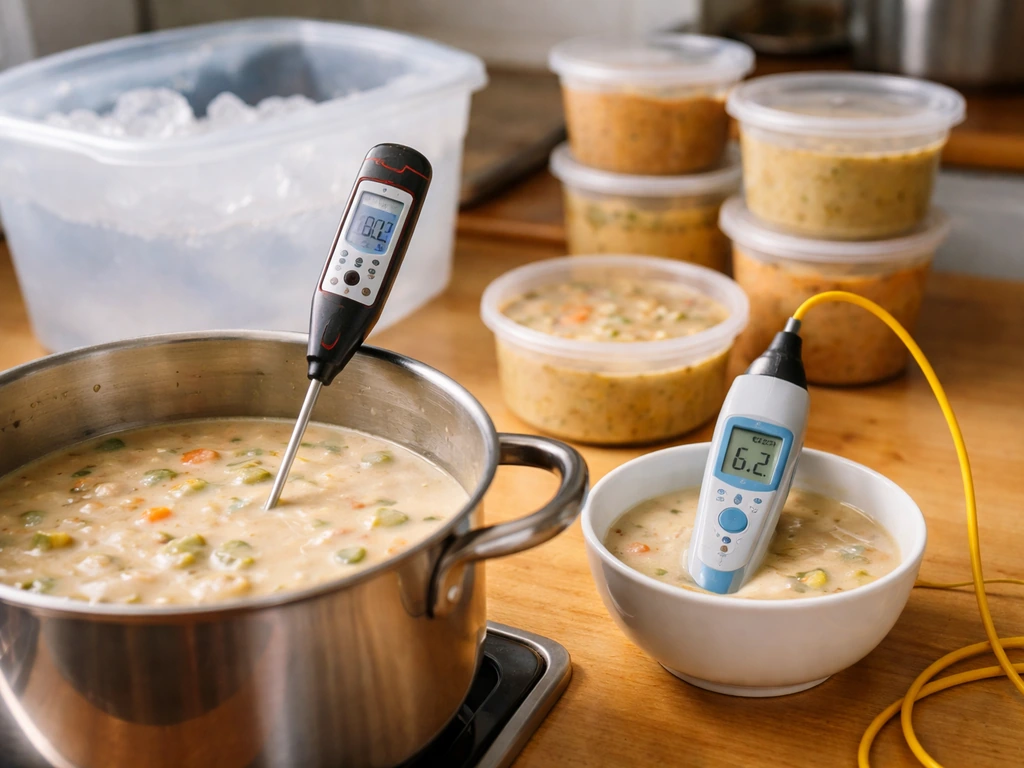
A realistic contamination scenario looks like this: a large pot of cooked chicken soup (pH around 6.0) is left on the stove to cool for three hours before refrigeration. The center of the pot stays above 70°F for most of that time. Any C. perfringens spores that survived cooking germinate, and cells double roughly every 10 to 30 minutes under those conditions. in which of the following foods bacteria may grow rapidly By the time the soup is refrigerated, it may already contain unsafe bacterial loads. Reheating to a simmering temperature later may kill the vegetative cells but will not destroy the heat-stable toxin already produced.
What today looks like: storage, handling, and temperature/time controls
The most effective daily control for low-acid foods is temperature. The USDA FSIS defines the danger zone as 40°F to 140°F (4°C to 60°C), the temperature range where most pathogens grow fastest (the danger zone). Keeping low-acid TCS (time/temperature control for safety) foods out of that range is the single highest-leverage action in food handling. where do pathogens grow best
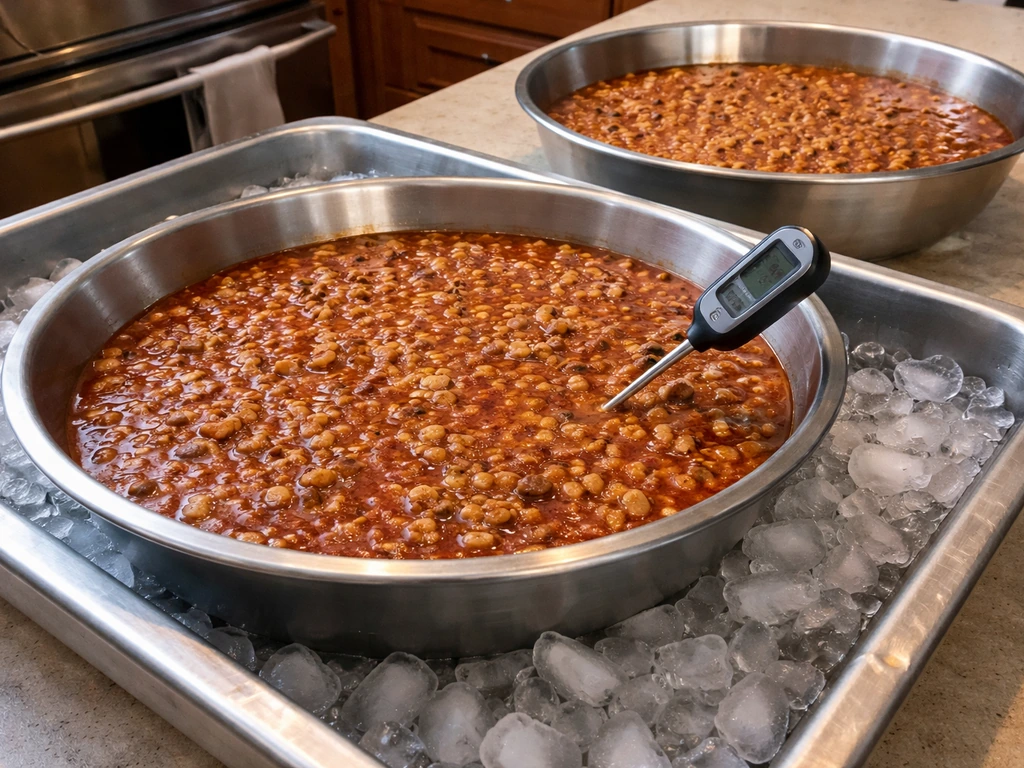
For cooling cooked low-acid foods, the FDA Food Code 2022 requires a two-stage process: cool from 135°F to 70°F within 2 hours, then from 70°F to 41°F within a total of 6 hours from the starting point of 135°F. In practical terms, this means dividing large batches into shallow containers no more than 2 to 3 inches deep, using an ice bath, or using a blast chiller. Leaving a full stockpot in the refrigerator door does not meet this standard because the mass of food insulates itself and the center stays warm for hours.
For storage, low-acid cooked foods should be refrigerated at 40°F or below and consumed or discarded within 3 to 4 days for most items. Listeria is the key concern in the refrigerator because it continues to multiply slowly even at 38°F. Ready-to-eat deli meats, soft cheeses, and pre-made salads stored for extended periods carry genuine Listeria risk even when continuously refrigerated.
Cross-contamination is equally important. Raw proteins at neutral pH carry pathogens on their surfaces, and those pathogens transfer easily to other low-acid foods through shared cutting boards, knives, hands, or drip contact. Keep raw and ready-to-eat foods physically separated throughout storage and prep.
Reheating needs to reach an internal temperature sufficient to kill vegetative cells: 165°F for poultry, 160°F for ground meat, and at minimum 165°F for any reheated TCS food in foodservice settings. This is effective against most vegetative pathogens, but reheating does not eliminate preformed toxins from S. aureus or B. cereus. If those toxins are already present, the food is unsafe regardless of reheating temperature.
Preservation and hurdle strategies to prevent growth in low-acid foods
When temperature control is not enough on its own, or when you need shelf-stable products, you need to add other hurdles. The goal is to stack conditions so that even if one control fails slightly, another picks up the slack.
Acidification
Adding acid to bring a food's equilibrium pH to 4.6 or below is one of the most reliable ways to prevent pathogen growth in otherwise low-acid foods. The FDA recognizes acidification as a primary control measure. For deli-type salads, for example, the FDA CPG guidance notes that bringing the pH to 4.4 or below can prevent Listeria growth. This has to be the final equilibrium pH of the entire product, not just the surface, which is why testing finished products rather than just the acidulant addition matters.
Salt and sugar as water activity reducers
Salt (sodium chloride) and sugar reduce water activity by binding free water, making it unavailable to bacteria. This is the principle behind cured meats, jams, and brined vegetables. To meaningfully inhibit most pathogens, aw needs to drop below about 0.91. Getting there with salt alone requires concentrations that most modern palates find unpleasantly salty, which is why salt is usually combined with refrigeration or acidification rather than used as the sole control.
Thermal processing
For low-acid foods that will be stored at room temperature, thermal processing must be sufficient to destroy spores, not just vegetative cells. This is where home canning becomes critical. Boiling water bath canning reaches only 212°F (100°C) at sea level, which is not sufficient to destroy C. botulinum spores in low-acid foods. Pressure canning reaches 240°F (116°C) at 10–15 PSI, which achieves the time-temperature combination needed to destroy those spores in low-acid vegetables, meats, and beans. Using a boiling water bath on low-acid foods is one of the most dangerous preservation mistakes a home cook can make.
Commercial sterilization
Commercially canned low-acid foods use validated retort processes that achieve a 12-log reduction of C. botulinum spores, the "botulinum cook" standard. This is not something replicable in a home kitchen with standard equipment. If you are producing low-acid shelf-stable foods commercially, FDA registration and a validated scheduled process are legal requirements, not optional safeguards.
Special cases: spore-formers, toxin-formers, and reheating/cooling pitfalls
Spore-forming bacteria deserve separate attention because they play by different rules. Bacillus cereus and Clostridium species produce spores that survive normal cooking temperatures. When a cooked low-acid food cools slowly, those spores germinate and the vegetative cells multiply. With B. cereus in particular, there are two distinct illness syndromes: the emetic (vomiting) syndrome caused by a preformed heat-stable toxin produced in the food, and the diarrheal syndrome caused by toxin produced in the gut. The emetic toxin survives reheating. For starchy low-acid foods like rice, pasta, and potatoes, the only reliable control is rapid cooling and proper refrigeration after cooking.
Clostridium perfringens is the other spore-former that causes consistent problems in institutional food settings. It grows rapidly between 109°F and 117°F (43°C to 47°C), which means a large tray of beef stew cooling on a steam table that has been turned off is essentially an incubator. The organism doubles every 10 minutes under optimal conditions. Illness follows when contaminated food is consumed without thorough reheating.
Staphylococcus aureus is not a spore-former but produces a heat-stable enterotoxin in low-acid, high-protein foods under aerobic conditions. The toxin survives cooking temperatures that kill the bacteria. S. aureus commonly arrives via food handlers (nasal passages and skin are common reservoirs), so personal hygiene and avoiding bare-hand contact with ready-to-eat foods are the primary controls. The toxin production also requires growth to relatively high cell numbers (around 10^5 cells per gram), which is another reason temperature control that prevents growth in the first place is more effective than relying on cooking to make contaminated food safe.
One important caveat across all of this: low acid alone does not guarantee that pathogens will grow. If a low-acid food is also frozen, thoroughly dried, or commercially sterilized, the pH range becomes irrelevant because other conditions have removed the possibility of growth. The pH range matters most when the food is in the temperature danger zone with adequate moisture and time. That combination, neutral pH plus warmth plus moisture plus time, is what drives real-world foodborne illness.
Quick checklist and practical next steps for safer food choices
Use this as a daily reference for kitchens, food prep environments, and at-home food handling. It covers the most common failure points for low-acid foods.
- Identify your TCS foods: cooked meat, poultry, fish, eggs, dairy, cooked grains, cooked beans, cut produce, and cooked starchy foods all qualify. These are your highest-risk items because they are low-acid and high in available moisture.
- Keep TCS foods out of the danger zone (40°F to 140°F) as much as possible. Two hours is the maximum cumulative time allowed at room temperature before food must be discarded or rapidly chilled.
- Cool large batches correctly: divide into shallow containers (2 to 3 inches deep), use an ice bath, stir frequently, and hit 70°F within 2 hours and 41°F within 6 total hours from 135°F.
- Refrigerate at 40°F or below and use a calibrated thermometer to verify. Refrigerator dials are not always accurate.
- Reheat low-acid TCS foods to at least 165°F internal temperature. Use a food thermometer, not cooking time, to verify.
- If using acidification as a control (for deli salads, pickles, sauces), verify the final equilibrium pH of the finished product reaches your target (4.6 or below for general pathogen control, 4.4 or below for Listeria-specific control per FDA guidance). Test with a calibrated pH meter, not just strips.
- Never use boiling water bath canning for low-acid foods like green beans, carrots, beets (not acidified), meat, or mixed dishes. Use tested pressure canning recipes from USDA-approved sources.
- Prevent cross-contamination: use dedicated cutting boards for raw proteins, wash hands between handling raw and ready-to-eat foods, and store raw meats on the lowest shelf in the refrigerator.
- For high-risk groups (pregnant individuals, older adults, immunocompromised individuals), extend Listeria precautions: avoid deli meats and soft cheeses unless heated to steaming, and minimize long refrigerator storage of ready-to-eat low-acid foods.
- If you are in food service or food manufacturing and producing low-acid shelf-stable products, review your HACCP plan to confirm pH, aw, and thermal process controls are validated, not just assumed.
The core principle here is simple even if the microbiology is not: low-acid foods give pathogens a hospitable environment at the chemical level, so <in general pathogens grow very slowly at what pH level, but do germs grow in hot or cold>, and temperature is the practical lever you reach for every day to compensate. Get both right, understand the exceptions for spore-formers and toxin-formers, and use acidification or pressure canning when shelf stability is required. Those three things together address the vast majority of real-world risk in low-acid foods.
FAQ
If a food is “low-acid,” does that mean pathogens will definitely grow in it?
No. Growth still requires the right combination of temperature, moisture (water activity), time, and available nutrients. If the food is frozen, shelf-sterilized, or dried to very low water activity, pH becomes much less predictive because pathogens either cannot grow or cannot access the conditions they need.
What pH measurement should I trust, raw ingredient pH or finished-product pH?
Trust the finished-product equilibrium pH, not the pH of an ingredient or only the surface. Acid needs time to distribute, especially in thicker foods and larger batches, so a product can test “safe” on the outside while the center remains above the target pH.
Why does temperature matter so much if pH already makes low-acid foods risky?
Because pH only limits chemical tolerance, temperature determines whether organisms can actually multiply fast enough to reach infectious or toxin levels. In practice, the biggest failures happen during cooling and hot holding, when low-acid foods sit in warm, oxygen-depleted, high-moisture conditions.
How deep can a container be when cooling soup or stew to reduce pathogen growth risk?
Use shallow containers. As a practical rule, keep depth around 2 to 3 inches (about the size of a typical hotel food pan) so the center cools quickly enough to meet the two-stage cooling targets. Deeper stockpots cool too slowly in the middle.
Is it safe to reheat leftovers to the suggested temperatures if they were left out too long to start with?
Reheating can kill vegetative cells, but it cannot reliably “undo” toxins already formed. If a time-temperature violation allowed toxin production, the food may remain unsafe even after reaching the correct internal temperature.
Which is more dangerous for low-acid foods, leaving them warm for too long, or storing them in the fridge for too many days?
Warm holding is often the faster risk because it supports rapid growth. However, fridge storage still matters for organisms like Listeria, which can keep increasing slowly at refrigeration temperatures, so long holding periods increase risk for ready-to-eat foods.
Does “smell and look” tell me whether low-acid food is unsafe?
No. Many pathogen hazards do not cause immediate off odors or visible spoilage, especially when the concern is preformed toxins. The safe approach is strict time-temperature control and, when relevant, validated acidification or proper canning.
What’s the safest way to cool a large pot if I don’t have a blast chiller?
Split into shallow portions, use ice baths, and chill quickly so the center passes through the warm danger range fast enough. Also avoid placing the pot in the refrigerator door, since insulation and airflow limitations can keep the center warm for hours.
Can acidification make any low-acid food safe at room temperature?
Only if you achieve the correct final equilibrium pH throughout the whole product and maintain other controls. Acidification alone does not replace refrigeration for foods that are not shelf-stable, and it does not eliminate spore hazards if you are trying to create true shelf-stability.
Is salt or sugar a substitute for pH control in low-acid foods?
Not usually by itself. Salt and sugar reduce water activity, but achieving the levels needed to meaningfully inhibit most pathogens can be taste-prohibitive and still requires correct temperature and storage. In practice, these are supportive hurdles, not a free pass.
What’s the biggest home canning mistake with low-acid foods?
Using boiling-water bath canning for foods that require spore destruction. Low-acid foods need pressure canning to reach the time-temperature conditions required to control botulinum spores.
Why is “simmering” not enough for some low-acid leftovers like rice or potatoes?
Because the hazard may come from spores that germinate during slow cooling. If cooling is too slow, toxin production or high cell counts can occur before reheating. Fast cooling and immediate refrigeration are the key controls for starchy low-acid foods.
How can I prevent cross-contamination with ready-to-eat foods when working with raw proteins?
Use separate utensils, cutting boards, and serving tools for raw and ready-to-eat items, and avoid letting raw juices contact cooked or sliced products. Also wash hands after touching raw proteins, and never use the same gloves or towel for raw then ready-to-eat tasks.
Next Article
Pathogenic Bacteria Grow Best in the Danger Zone: Why and How to Stop It
Explain danger zone temps, how pH, moisture, oxygen, nutrients drive growth, and step-by-step controls to prevent foodbo